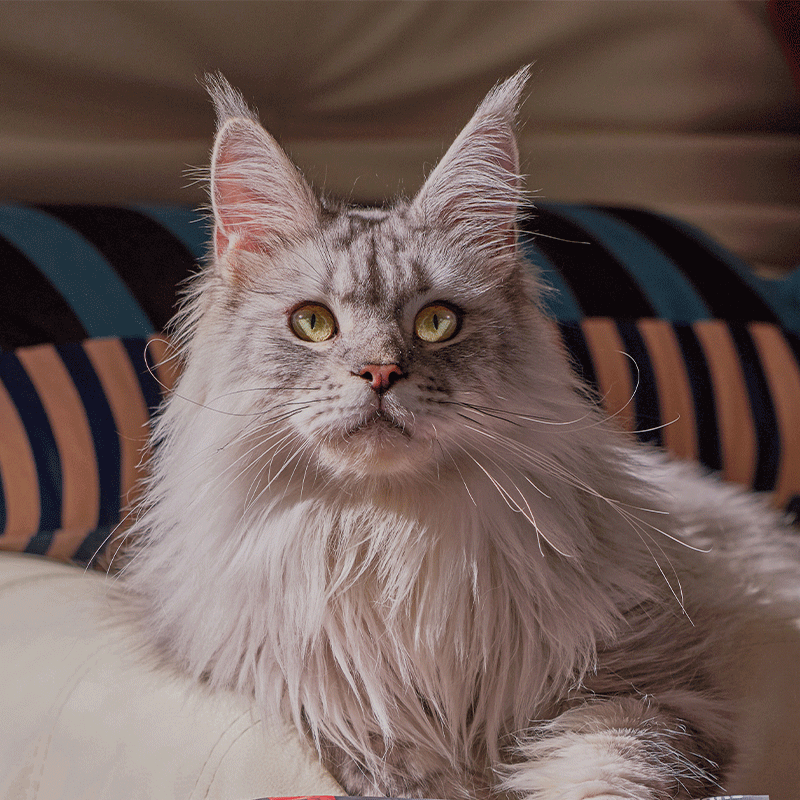
What Causes Hairballs?
Cats are meticulous groomers — using their tongues like built-in brushes to keep their coats clean. When they lick, tiny, backward-facing barbs on their tongues pull loose hair from their coats. Since cats can’t spit this hair out, they swallow it.
Most of that hair passes harmlessly through their digestive tract, but sometimes it builds up in the stomach and forms a hairball. When that happens, your cat will try to expel it by vomiting — often leaving you with a “lovely” little mess on the rug.
Hairballs are more common in certain cats, like:
- Long-haired breeds like Persians and Maine Coons
- Older cats (who are often more diligent groomers)
- Indoor cats (who may shed more or groom out of boredom)
Are Hairballs Normal?
Occasional hairballs are usually nothing to worry about. But frequent vomiting, gagging without producing a hairball, or loss of appetite may signal something more serious — like a gastrointestinal blockage — and should be checked out by your veterinarian.
That said, frequent hairballs can often be managed with a few lifestyle and dietary changes.
How to Help Reduce Hairballs
While you can’t stop your cat from grooming, you can help their body manage swallowed hair more effectively.
Here’s how:
Brush your cat daily, especially if they have long hair. Removing loose fur before it’s swallowed can significantly cut down on hairball formation.
Water helps keep the digestive system moving. Many cats don’t naturally drink enough water, so offering high-moisture food like Tiki Cat™ Hairball Control Velvet Mousse™ or adding a Tiki Cat™ wet topper to dry kibble can support hydration.
Certain ingredients like fiber are known to increase dry matter in the intestinal tract and can help material have a quicker transit time. With better transit, any consumed hair (through grooming) will be moved along by the increase in fiber.
Designed for Digestion. Made for Carnivores.
Tiki Cat™ Hairball Control recipes are specially designed to help reduce hairball formation with a gentle blend of soluble and insoluble fiber to support motility in the digestive tract.
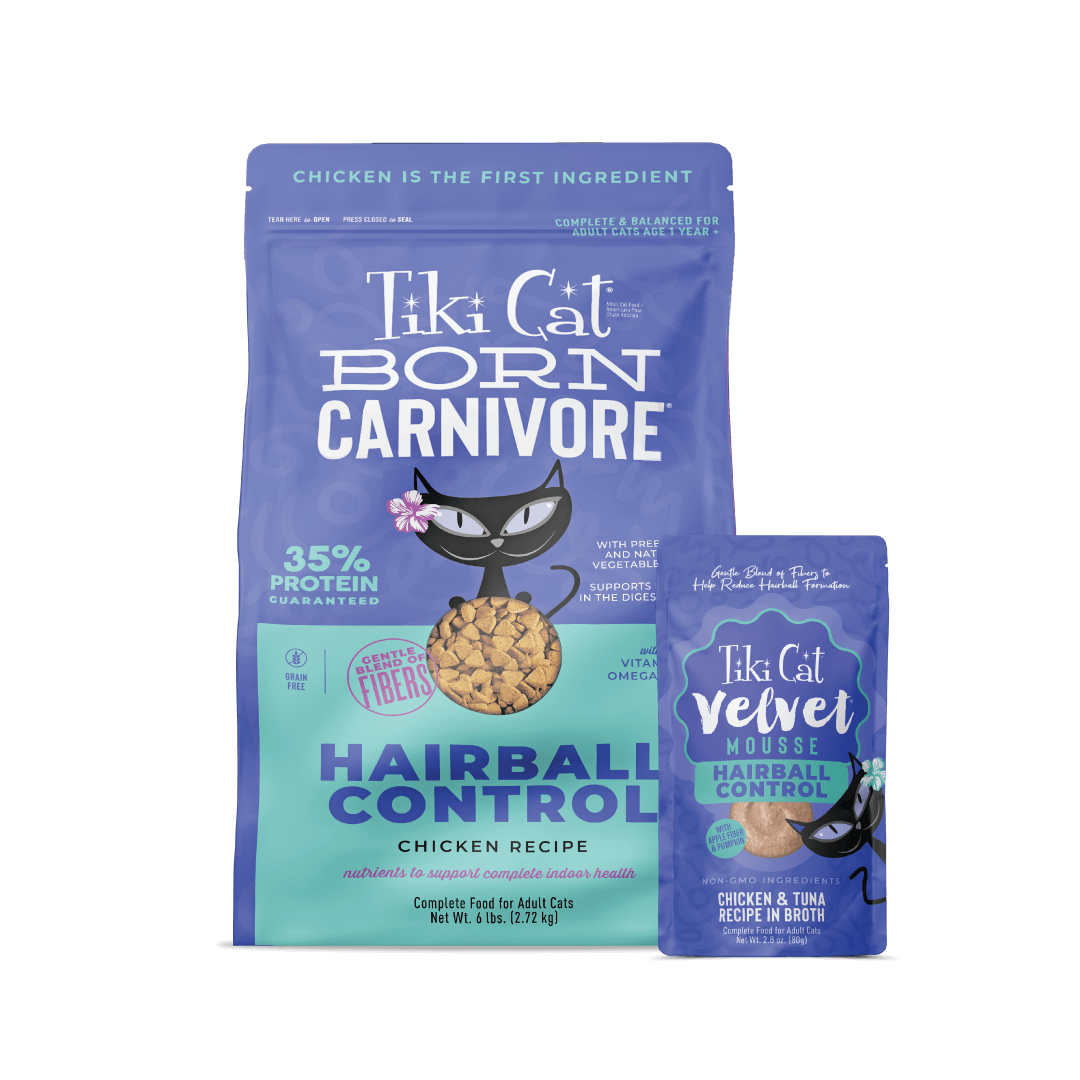
Available in two delicious formats:
As obligate carnivores, cats are healthiest on their natural prey diets. That’s why Tiki Cat™ foods mimic the composition of prey — with high animal protein and moisture, low to no carbohydrates, and optimal variety — to help cats thrive from the inside out.
Proactive Care for a More Comfortable Cat
Hairballs may be common, but they’re not something you or your cat has to live with. With a little grooming help and the right nutrition, you can help support your cat’s digestive health and reduce the dreaded surprise on your rug.
Explore Tiki Cat™ Hairball Control foods and see the difference real carnivore nutrition can make. Because when your cat feels better, you both thrive.


